Alterations
When to Alter, When to Replace: A Tailor's Rule of Thumb
Some garments are worth the fix and some aren't. The deciding factor usually isn't the price of the alteration.
MODA Cleaners
People bring us things and ask, slightly apologetically, whether it’s worth it. Often it is. Sometimes it honestly isn’t, and we’d rather say so.
Almost always worth altering
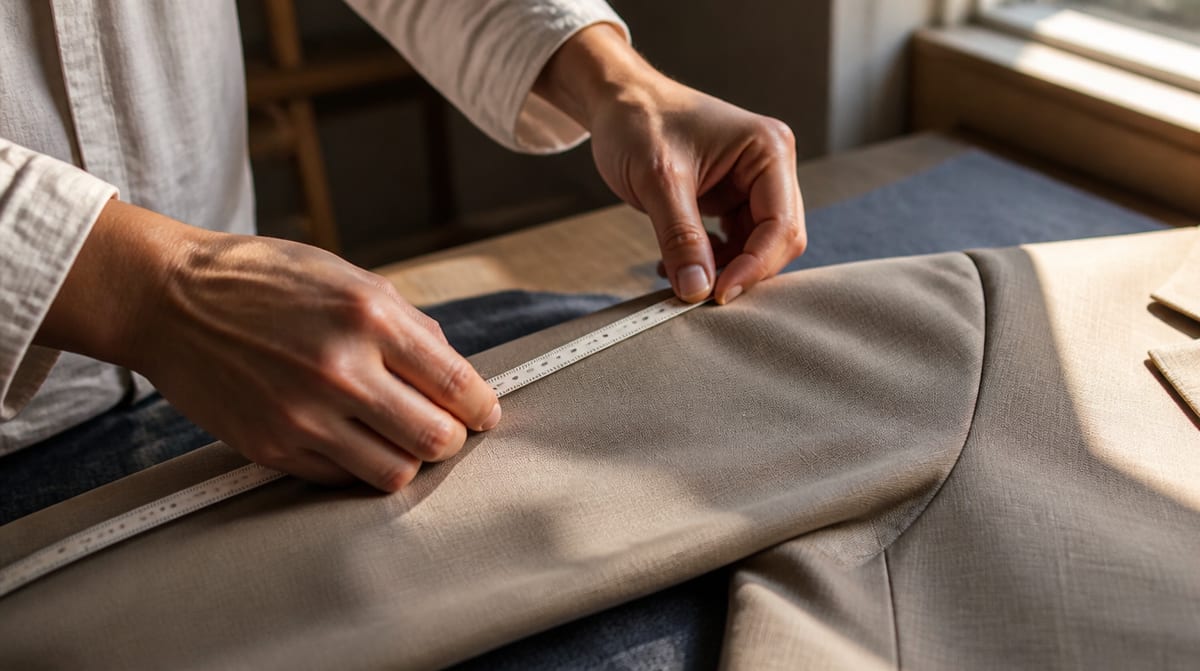
Length. Hems are the highest-return alteration there is. Trousers that break correctly and sleeves that show a little shirt cuff change how an entire outfit reads, and the work is straightforward.
Waist adjustments. Most trousers and skirts have enough seam allowance to move an inch or two either way.
A jacket that fits in the shoulders. If the shoulder seam sits where your shoulder ends, everything below it can be adjusted. This is the single thing to check before buying anything second-hand.
Anything sentimental. Cost-per-wear stops being the metric on a garment you’re keeping for other reasons.
Usually not worth it
A jacket that’s wrong in the shoulders. Reworking a shoulder means dismantling the jacket. It can be done; it rarely costs less than the garment is worth.
Fabric that’s gone. Thin, shiny, or pilling badly means the fibre is spent. A repair holds; the cloth around it doesn’t.
Fast-fashion knits. Loose construction and thin yarn mean the repair often won’t hold long enough to justify itself.
The genuinely useful repairs people forget
- Reweaving on a moth hole or a small snag, done early, is close to invisible.
- Replacing a zipper costs a fraction of the coat it saves.
- Relining a jacket whose shell is still perfect. The lining always dies first.
- Buttons. Replacing a full set on a coat can change how it looks entirely.
Our rule
If the fabric is sound and the shoulders fit, alter it. If the fabric’s gone, let it go. Bring it in and we’ll tell you which one you’ve got.
Ready to hand it off to us?
Tell us when suits you and we’ll collect from your door. There’s no extra charge for pickup and delivery.